Why Does My Jaw Hurt in the Morning? Causes and Treatment Options
Waking with a sore, tight jaw usually points to something that happened overnight. A dentist explains the causes of morning jaw pain, the symptoms that separate muscle strain from joint problems, the red flags that need urgent care, and what treatment helps.
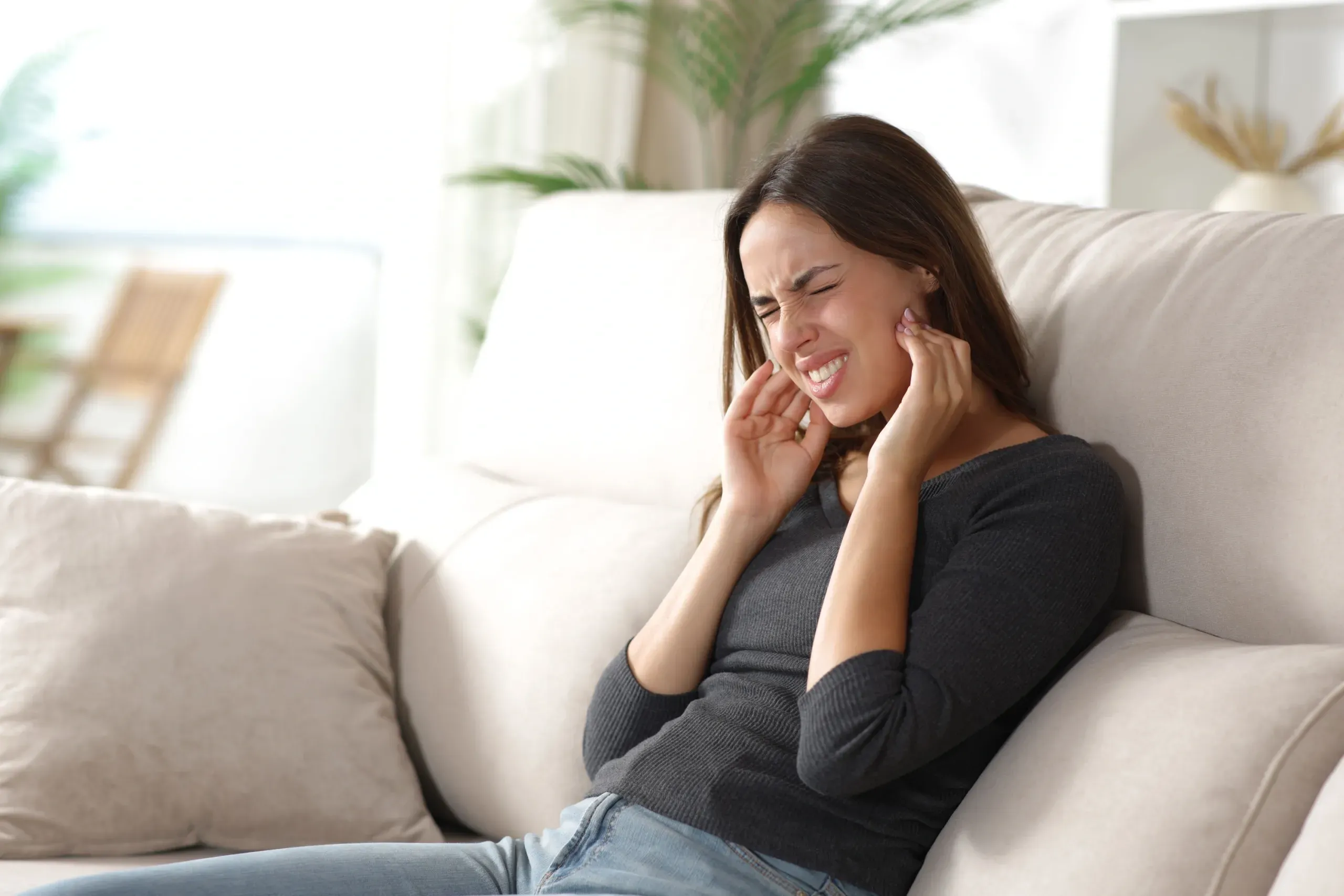
Why does my jaw hurt in the morning? In most cases, because of what the jaw was doing while you slept. Clenching and grinding hold the chewing muscles contracted for hours without rest, so they are fatigued and tender by the time the alarm goes off. Jaw joint problems, a bite that does not close comfortably, and disrupted overnight breathing feed the same pattern. Pain that peaks on waking and eases through the day points toward sleep, not injury.
Why Does My Jaw Hurt Worse in the Morning Than at Night?
The masseter, the thick muscle at the angle of the jaw, is one of the strongest muscles in the body for its size, and the temporalis fans across the side of the head above the ear. Awake, they fire in short bursts and then release, idling with the teeth slightly apart.
Sleep removes that braking system. Nothing tells the jaw to let go, so a clenching episode can hold a near maximal contraction far longer than you would tolerate awake. Blood flow through a contracted muscle drops, the joint carries load in one position for hours, and you wake with tightness, a dull ache in front of the ear, and a jaw that needs a few minutes to open fully. The timing itself is diagnostic. Pain that fades as you talk and eat suggests overnight activity, while pain that builds through the day points to daytime habits such as gum chewing or bracing the jaw while you concentrate.
The Most Common Causes of Morning Jaw Pain
Morning jaw pain rarely has one cause. It is usually two or three of the following layered together, which is why treating one of them gives partial relief.
Bruxism: Nighttime Clenching and Grinding
Bruxism is repetitive jaw muscle activity involving grinding the teeth or bracing the jaw. The American Academy of Sleep Medicine classifies sleep bruxism as a sleep-related movement disorder, and an international expert consensus sets out how clinicians assess and grade it, from self-report through clinical examination to instrumental recording (Lobbezoo et al., Journal of Oral Rehabilitation, 2018).
Two things surprise most patients. Grinding is the audible version, so a partner may report it, but silent clenching fatigues the muscle just as much and goes unnoticed. And the forces are considerable, which is why bruxism marks the teeth long before anyone feels pain.
TMJ Disorder, or TMD, and How It Differs From Muscle Overuse
The temporomandibular joint sits just in front of each ear and is the hinge that lets the lower jaw open, close and slide sideways, with a cushioning disc between the bone surfaces. The NIH National Institute of Dental and Craniofacial Research describes temporomandibular disorders as a group of conditions affecting that joint, the muscles that move it, or both, rather than a single diagnosis.
The distinction is practical. Muscle overuse gives tenderness in the muscle bellies and pain on chewing, but the joint still moves smoothly. Joint involvement adds mechanical signs: clicking or popping as the disc slips out of position, a jaw that veers to one side, or restricted opening. Many patients have both, because months of overloaded muscles change how the joint is loaded.
Stress and Sleep Quality
Stress does not clench the jaw directly, but it shapes the sleep in which clenching happens. Bruxism episodes cluster around brief arousals, the momentary shifts toward lighter sleep everyone has overnight. Anxiety, alcohol near bedtime, late caffeine and an irregular schedule all increase those arousals, and jaw activity rises with them. Patients often notice their morning soreness tracks their workload a night or two behind.
Bite Alignment, Worn Teeth and Missing Teeth
How the upper and lower teeth meet determines whether the jaw can find a stable resting position. When teeth are worn flat, when a crown sits slightly high, or when back teeth have been lost and never replaced, the jaw hunts for a position and braces the muscles to hold it. That bracing is work, and work done all night shows up as morning soreness. Wear is self-reinforcing too, since flattened surfaces remove the guidance that normally separates the back teeth during side movements.
Snoring and Disrupted Breathing at Night
Snoring and jaw clenching travel together more often than people expect. When the airway narrows, the body responds with arousals and with muscle activity that brings the jaw and tongue forward, and that activity can register as clenching. Patients reporting both loud snoring and morning jaw pain often improve on both fronts once the airway is addressed. If habitual snoring accompanies your jaw soreness, raise it at your appointment, and snoring treatment with Solea Sleep is one option we can discuss. Snoring is not the same as obstructive sleep apnea. Witnessed pauses in breathing, gasping or heavy daytime sleepiness need evaluation by a physician and a sleep study.
A Symptom Checklist: Working Out Which One You Have
Note what applies to you. The pattern separates muscle-driven pain from joint-driven pain and gives your clinician a better starting point than pain alone.
- Clicking or popping on opening or closing, which suggests the disc is moving out of position.
- Locking, meaning the jaw catches on opening or will not close smoothly, which points to the joint.
- Headaches at the temples, usually present on waking and felt as pressure rather than a throb.
- Worn or flattened enamel, chipped front edges, or a tooth fractured without obvious cause.
- Tooth sensitivity to cold or pressure with no decay and no crack, often across several teeth.
- Tinnitus or ear fullness with normal hearing tests, because the joint sits directly against the ear canal.
- Neck and shoulder tension that never fully resolves with massage or stretching.
Three or four of these together, with morning timing, make overnight clenching likely. Add clicking or locking and the joint is involved too.
Red Flags: When Jaw Pain Needs Urgent Attention
Most morning jaw pain is uncomfortable rather than dangerous. A few presentations are not, and should not wait for a routine appointment.
- A jaw that locks open or locked closed and will not move, particularly if it happens suddenly. Same-day care.
- A sudden inability to bring the teeth together, or a bite that has visibly changed within days.
- Jaw pain with facial numbness, tingling or weakness on one side, which involves the nerve supply and needs prompt assessment.
- Jaw pain together with chest pain, shortness of breath, sweating or nausea. Cardiac pain can refer to the jaw, more often in women. Call 911 rather than a dental office.
- Fever, facial swelling or difficulty swallowing alongside jaw pain, which suggests infection.
Severe pain arriving abruptly after an injury belongs here too.
Treatment Options, From Conservative to Clinical
Jaw pain responds best to a stepped approach: least invasive first, a fair trial, escalate only if nothing shifts.
Self-Care First
Moist heat over the masseter and temple for fifteen minutes, morning and evening, genuinely helps muscle-driven pain. Soften the diet for a couple of weeks: no gum, no chewy bread, nothing that needs a wide bite. Rest the jaw by keeping lips together and teeth slightly apart, its proper resting position and one most clenchers have lost. Protect sleep with a consistent schedule and move alcohol and caffeine away from bedtime. Fewer arousals overnight means less jaw activity, so stress management counts. Give this two to three weeks.
Night Guards and Bite Appliances
A custom appliance is the dental baseline for bruxism and the first clinical step for most patients. It separates the teeth, redistributes load and protects enamel from further wear. A guard made from an impression of your own teeth behaves very differently from a boil-and-bite product, which can sit unevenly and sometimes encourages more clenching. An appliance manages the consequences of clenching and takes strain off the joint, but it does not switch off the muscle activity. Many patients wake with less pain and far less tooth damage while still clenching, which is why a guard is often paired with something aimed at the muscle itself.
Emface for TMJ
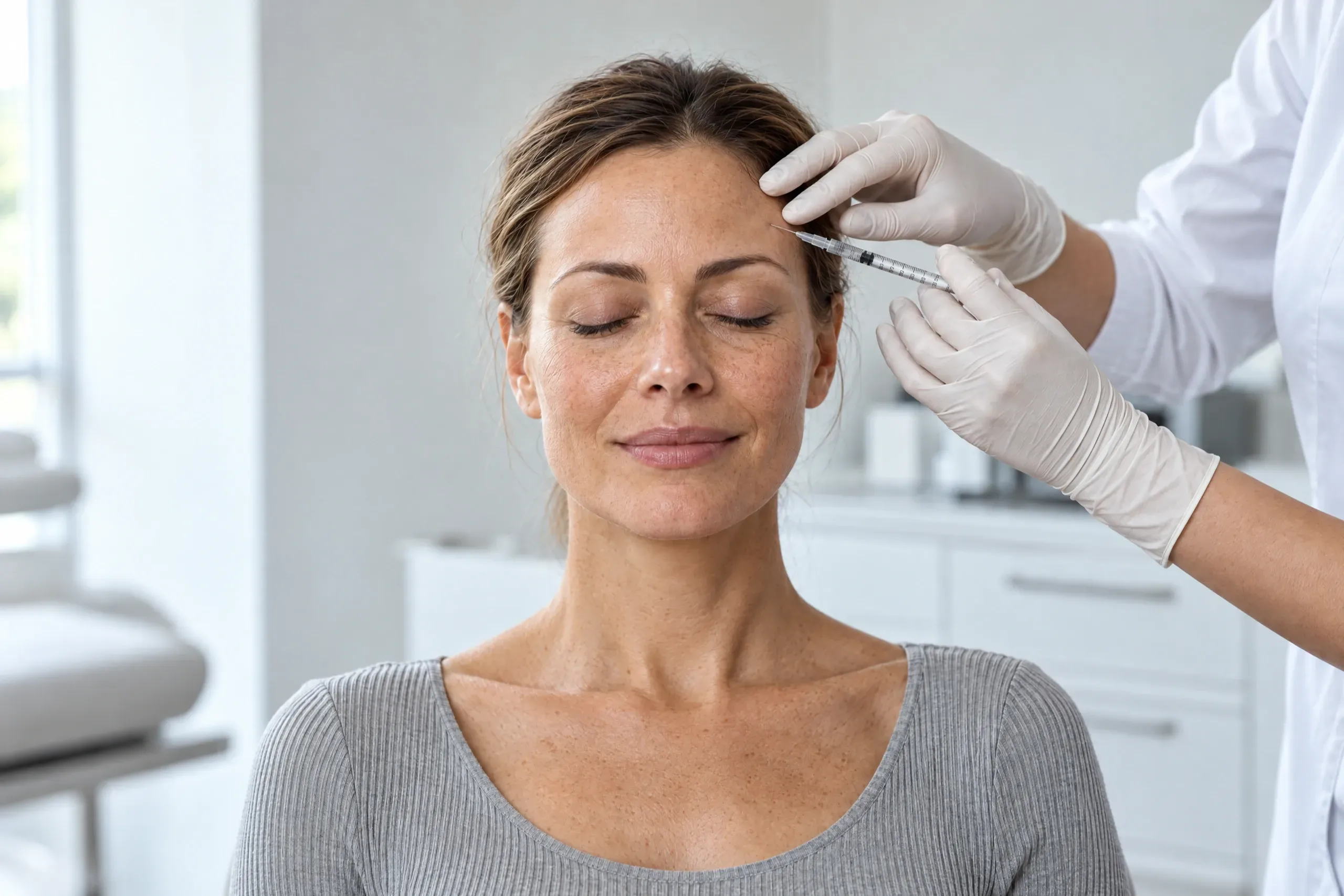
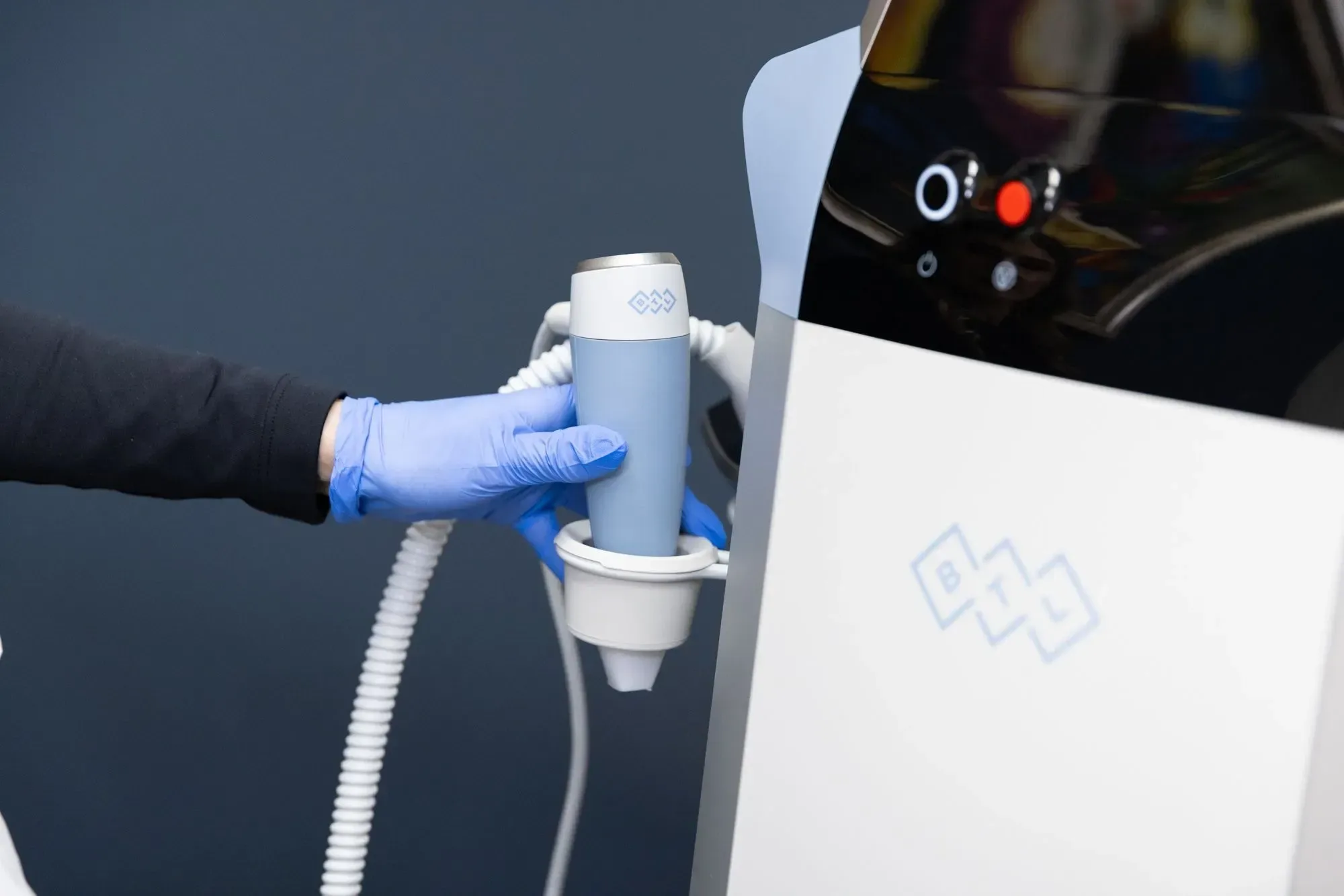
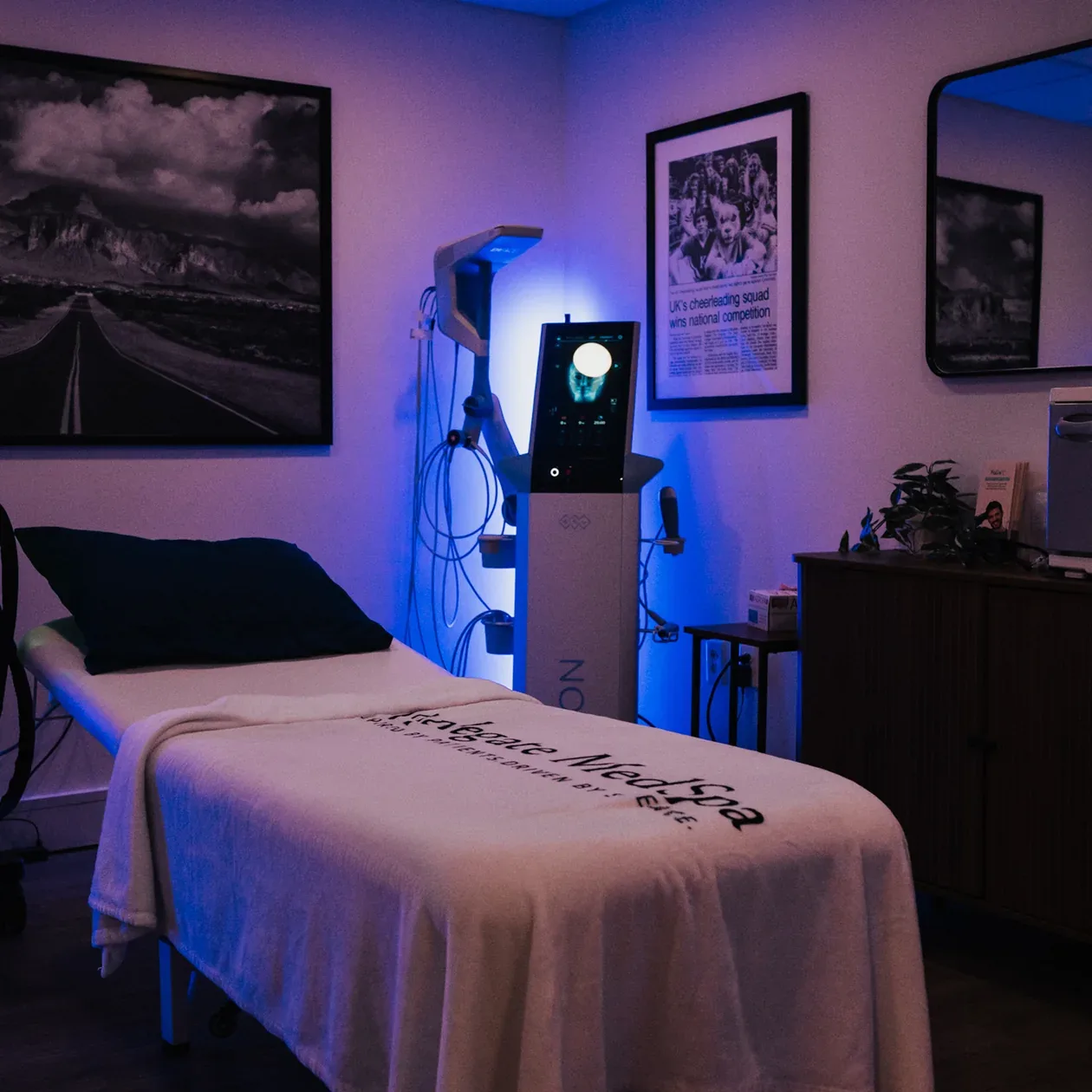
Emface treats the chewing muscles rather than the teeth. Applicators sit on the skin over the masseter and temporalis and deliver synchronized radiofrequency and HIFES, high intensity facial electrical stimulation, per the manufacturer's BTL device documentation. The radiofrequency warms the tissue while the stimulation cycles the muscle through contraction and release, helping an overworked muscle return to a more normal resting tone. No needles, sessions of around twenty minutes, no downtime. We use a course of four sessions for jaw tension, and most patients describe the area as looser and less tender. Read more about our needle-free approach to jaw muscle tension. Some practices instead inject the chewing muscle to reduce its contraction force, a different route with its own considerations and one to raise with whoever manages your jaw care.
Laser Therapy With Emvital
When discomfort sits in the muscles around the joint, and in the neck and shoulder tension that often travels with it, targeted laser therapy is a useful addition. Emvital uses a 1064 nm TriHIL laser to heat tissue at depth, supporting circulation and helping muscles in spasm release. Sessions take under thirty minutes with no recovery time. It is the same protocol we use for laser therapy for muscle and joint pain elsewhere in the body, applied to the jaw. Most patients have it alongside an appliance or Emface rather than on its own.
Why a Dental Practice Is the Right Place to Start
Jaw pain gets passed around. Patients see a physician for the headaches, an ENT for the ears and a therapist for the neck, and each sees one piece. A dental examination is the only appointment where the bite, the muscles and the airway are assessed together, because the evidence for all three is in the mouth. Wear facets record where and how hard you grind. The bite shows whether the jaw has a stable position to close into. A crowded airway, a scalloped tongue and a high palate suggest breathing is part of it.
Dr. Barry Applegate, DMD has practiced dentistry since 1993 and has worked with bite, jaw and airway problems throughout. That background is why our med spa treats jaw pain and TMJ dysfunction as a clinical problem with a dental foundation rather than a standalone aesthetic service.
Frequently Asked Questions About Morning Jaw Pain
Why does my jaw hurt in the morning?
Most morning jaw pain comes from clenching or grinding during sleep. Holding the chewing muscles contracted for hours leaves them fatigued and tender, and the joint carries load in one position. Bite problems, worn teeth and disrupted breathing contribute. Pain that is worst on waking points toward sleep-time activity.
How do I know if I grind my teeth at night?
Grinding often shows on the teeth before you feel anything. Look for flattened biting edges, chipped front teeth, sensitivity without decay, and a ridge of thickened tissue inside the cheek. A partner may hear grinding, though clenching is silent and just as tiring. A dentist can confirm it from the wear pattern.
What is the difference between bruxism and TMJ disorder?
Bruxism is the behavior: grinding or clenching the teeth, usually during sleep. TMJ disorder, or TMD, describes a problem in the jaw joint, the muscles that move it, or both. Bruxism can lead to TMD over time, but you can have either without the other. Clicking, locking or restricted opening suggests the joint is involved.
Can stress alone cause morning jaw pain?
Stress is rarely the whole story, but it often tips a jaw already under strain into pain. It increases the brief arousals during sleep that clenching clusters around, so busy periods produce sore mornings. Patients whose pain tracks their workload usually still have tooth wear or bite instability underneath.
How long does it take for jaw pain treatment to work?
Self-care such as heat, a softer diet and jaw rest typically shows some change within two to three weeks. A custom appliance often reduces morning soreness within the first few weeks of consistent wear. Treatments aimed at the muscle run as a course rather than one visit, with progressive change across it. Timelines vary.
Can TMJ pain go away on its own?
It often can. Many episodes settle within weeks once the trigger passes, particularly after a stressful stretch or a dental procedure. What does not resolve on its own is an underlying cause such as significant tooth wear, a missing back tooth or an airway issue. Pain lasting beyond a few weeks, or returning repeatedly, should be examined.
Is a night guard enough to stop jaw pain?
For some patients, yes. A well-fitted custom guard protects the teeth, redistributes load and reduces morning soreness for many people. It does not stop the muscle activity, so strong clenchers may still wake tight while their enamel stays protected. Pairing the appliance with treatment aimed at the muscle usually works better than either alone.
Can jaw pain cause headaches or ear pain?
Yes, and both are commonly mistaken for other conditions. The temporalis fans across the side of the head, so overuse produces temple headaches that are typically present on waking. The jaw joint sits against the ear canal, which is why it can produce earache, fullness or ringing when hearing tests are normal.
Book Your TMJ Evaluation in Covington, KY
If you have been waking with a sore jaw for more than a few weeks, an examination will tell you what is driving it. At Applegate Dentistry & MedSpa we assess the bite, the muscles and the airway in one appointment, then start with the least invasive option your findings support. That may be an appliance, it may be Emface for TMJ in Covington, KY, and for many patients it is a combination. Read more about TMJ treatment in Covington, KY, call (859) 365-3300, or book through our contact page.
Related Articles
- Letybo vs Botox: How the Two Neurotoxins Compare
- RF Microneedling vs Traditional Microneedling: What Is the Difference?
This article is educational and is not a diagnosis or a substitute for professional care. Individual results vary and no outcome is guaranteed. Reviewed by Dr. Barry Dean Applegate, DMD, Applegate Dentistry & MedSpa, 322 Greenup St, Covington, KY 41011. Last reviewed September 2026.