
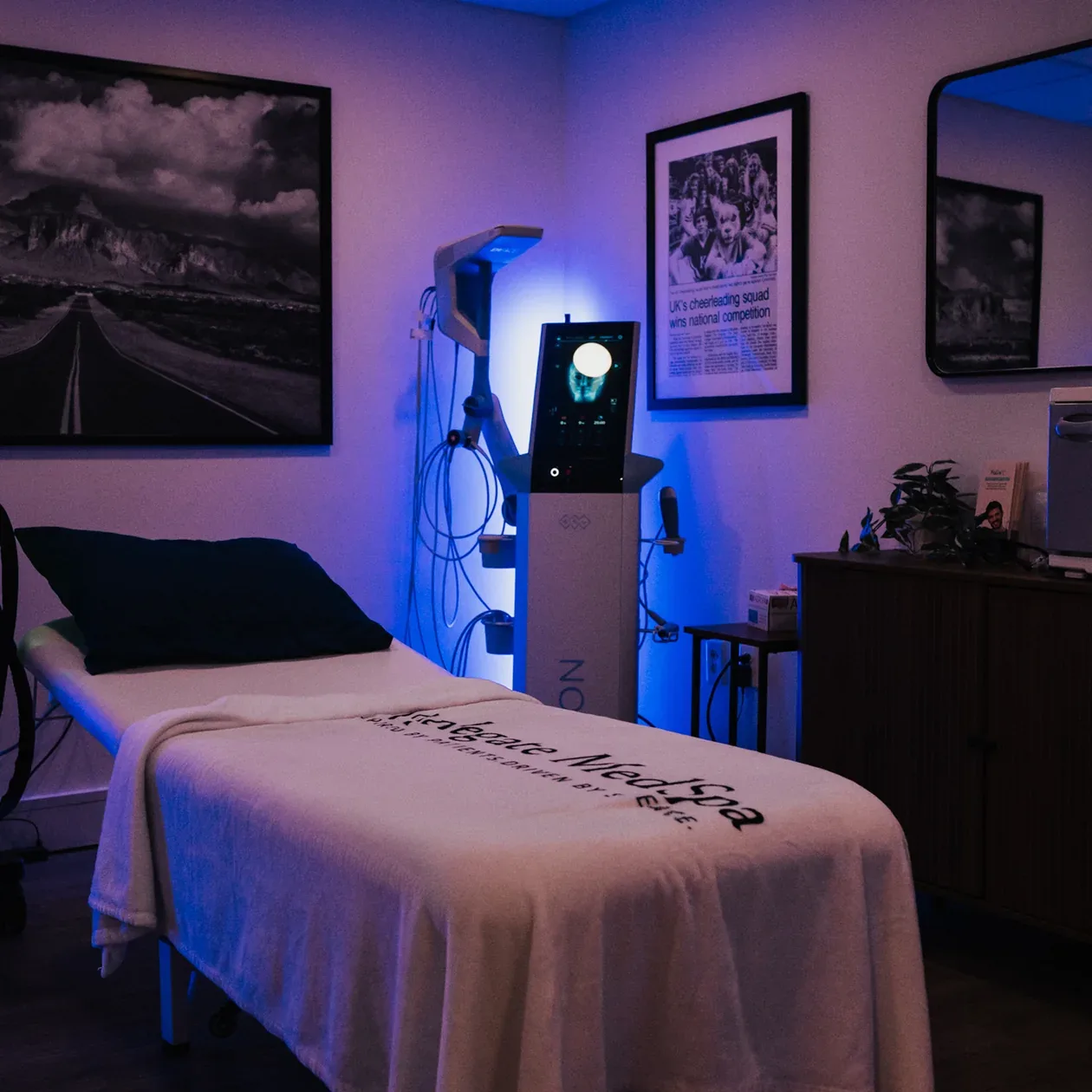
TMJ Treatment in Covington, KY
Relief for a Jaw That Never Rests
- Common In:
- Adults 20 to 60
- Primary Causes:
- Clenching, grinding, joint strain
- Treatment Time:
- 20-30 minutes
- Results:
- 2 to 6 weeks
Understanding Your Jaw
What Is TMJ and Jaw Pain?
Recognizing the Signs
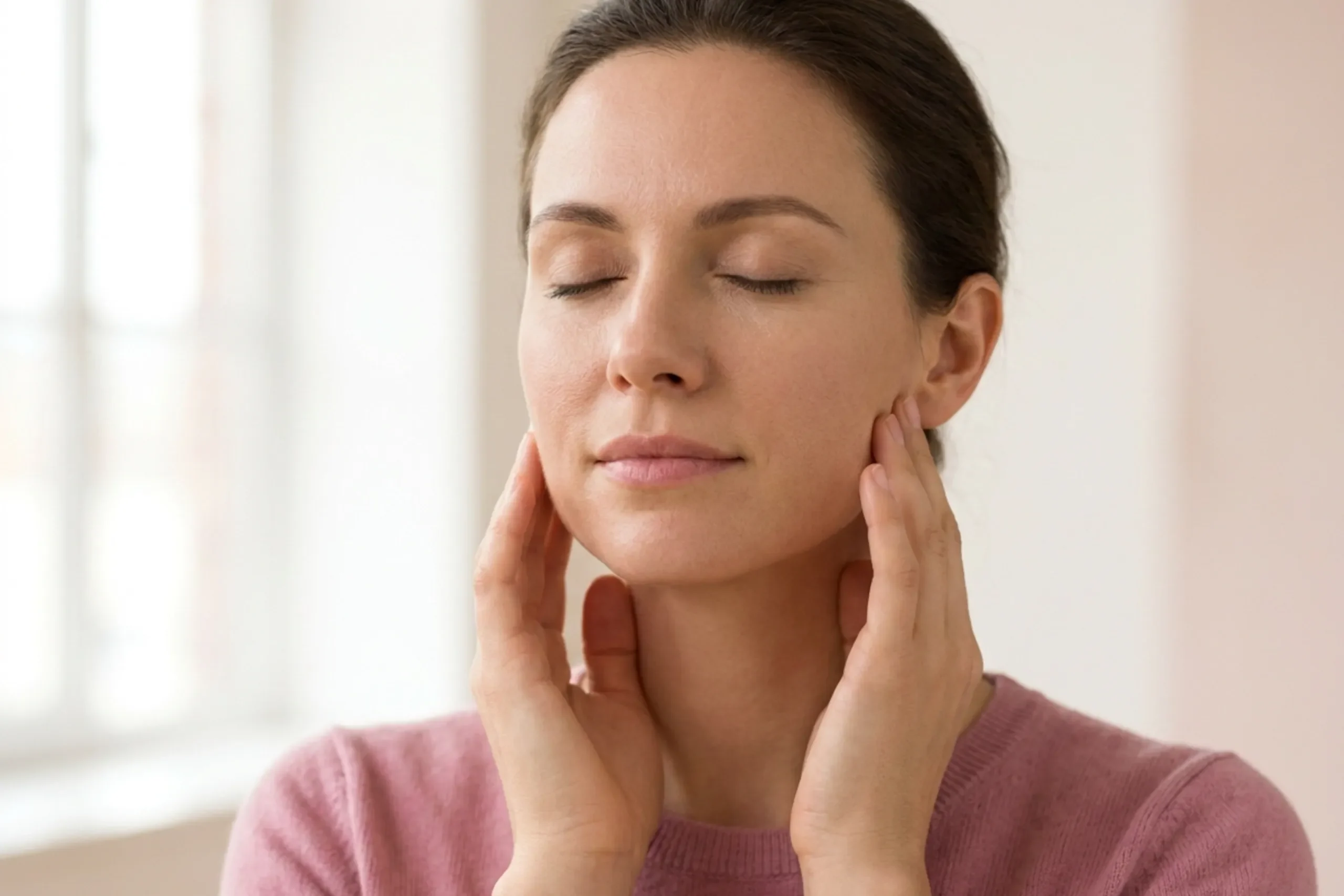
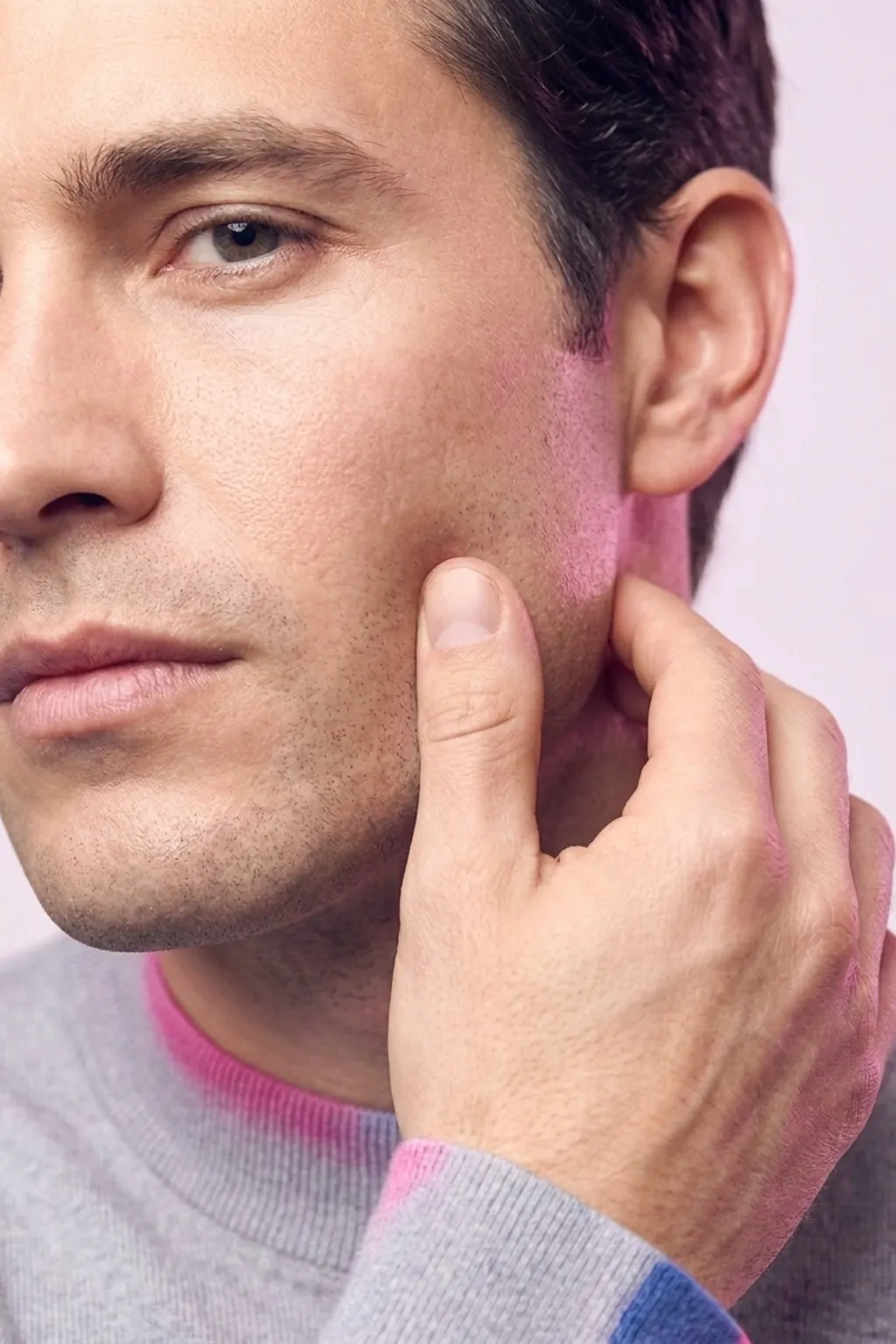
TMJ and jaw pain cover two overlapping problems: strain in the muscles that close your jaw, and dysfunction inside the temporomandibular joint itself. That joint is the small hinge just in front of each ear, and it is the only joint in the body that has to slide and rotate at the same time every time you chew, speak or swallow. Most people searching for TMJ treatment in Covington, KY have one of these, the other, or both at once.
When you wake with a tight, aching jaw, hear a click as you open, or notice your temples throbbing by mid afternoon, you are feeling muscles that never fully switched off overnight. Patients often describe a jaw that feels tired before the day has even started.
It wears on you. Chewing becomes something you plan around, sleep stops feeling restorative, and the headaches get written off as stress. We see this every week in patients from Covington, Latonia, Taylor Mill and Newport, across Kenton County and Northern Kentucky, and from the Cincinnati, OH side of the river. You can see how it fits with the rest of what we treat on our conditions we treat page.
Why Jaw Pain Happens
Understanding the Root Causes
01The Science
A healthy jaw joint glides on a small fibrocartilage disc that sits between the top of the lower jaw and the socket in the skull. The muscles driving it, mainly the masseter along the jawline and the temporalis over the temple, are built for short bursts of force during chewing. They are not built to hold a contraction for six or eight hours at a stretch, which is exactly what clenching asks of them.
That sustained load is what turns into pain. Muscle fibers held under tension accumulate metabolic waste, become tender to the touch and refer pain outward, which is why clenching so often shows up as an ache at the temples or behind the ear rather than in the jaw itself. This is the mechanism behind the most common causes of morning jaw pain.
Joint-driven problems follow a different path. The disc can slip forward out of position, which produces the click or pop on opening and can at times block the jaw from opening fully. Arthritic change in the joint surfaces adds stiffness and a gritty sensation on movement. The National Institute of Dental and Craniofacial Research notes that most temporomandibular disorders improve with conservative care, which is where we always begin.
02Deeper Understanding
What a Dentist Sees Here
How the Bite and Airway Drive Jaw Pain
Your teeth keep a record. Flattened cusps, chipped edges, hairline cracks, thinned enamel on the biting surfaces and notching at the gumline are all evidence of force, and together they tell us how long clenching has been going on and where the load lands. Cold sensitivity in an otherwise healthy tooth is often the first complaint, long before anyone connects it to the jaw.
The bite matters just as much. When teeth do not meet evenly, the muscles compensate to find a comfortable closing position and then hold that compensation all day. Dr. Applegate assesses the bite, the wear pattern, the joint and the airway in the same appointment, because those four things are rarely independent of one another.
Airway is the piece most often missed. A narrowed or collapsing airway during sleep can trigger clenching as the body works to reopen it, which is one reason jaw pain and snoring so often travel together. Where snoring is part of the picture, the Solea Sleep laser tightens the soft palate to reduce snoring. It is not a treatment for diagnosed obstructive sleep apnea, which needs a physician.
Contributing Factors
What Makes TMJ and Jaw Pain Worse?
Identifying Your Triggers
Jaw pain rarely has one cause. The American Academy of Sleep Medicine classifies sleep bruxism as a sleep-related movement disorder, and the tension pattern behind it usually extends into the neck and shoulders, overlapping with muscle and joint pain elsewhere in the body.
Clenching and Grinding
Sustained clenching loads the masseter and temporalis for hours at a time, leaving them tender, tight and slow to recover by morning.
Stress and Poor Sleep
Stress raises daytime clenching and fragmented sleep increases nighttime grinding, so the jaw muscles rarely get a full period of rest.
An Uneven Bite
When teeth do not meet evenly, the muscles hold a compensating position all day, which shows up as uneven wear and one-sided soreness.
Airway and Snoring
A narrowed airway during sleep can trigger clenching as the body works to keep it open, linking jaw soreness with snoring and restless nights.
Posture and Neck Habits
Forward head posture at a desk or phone shifts jaw position and recruits neck muscles, spreading tension from the temples into the shoulders.
Joint Wear and Injury
Disc displacement, past trauma and arthritic change alter how the joint tracks, producing clicking, stiffness and a limited range of opening.

Why Applegate
Why Choose Applegate MedSpa for TMJ Care in Covington, KY
Applegate is a dental practice that runs a med spa, not a med spa that added a jaw service. Dr. Barry Applegate, DMD has treated bite, jaw and airway concerns in Covington since 1993, and that background shapes every jaw assessment we do.
- Dental Jaw Assessment
- The bite, tooth wear, the joint, the airway and the muscles are all examined in a single appointment.
- Since 1993 in Covington
- Three decades treating jaw, bite and airway concerns for patients across Kenton County and greater Cincinnati.
- Needle-Free Treatment Routes
- Both of our jaw options work through device technology, so relief does not depend on injections.
- Conservative Care First
- Night guards, bite refinement and habit coaching stay part of the plan, because the simplest option comes first.
- Two Device Routes
- Emface for TMJ works on the jaw muscles themselves while the Emvital laser eases the pain that travels into the neck and temples, and both are in one building.
- Care That Fits Your Week
- Sessions run under 30 minutes with no downtime, so treatment slots between meetings rather than costing a day off.
TMJ Treatment Options Compared
Both routes are needle free and performed in our Covington office. Which one fits depends on whether your pain is muscle driven or joint driven.
| Treatment | Best For | Session Time | Results Timeline | Maintenance |
|---|---|---|---|---|
| Emface for TMJ | Muscle-driven clenching and grinding | 20-30 minutes | 2 to 6 weeks | Series of 4 sessions |
| Laser Therapy for Pain with Emvital | Joint and surrounding muscle pain | Under 30 minutes | 1 to 4 weeks | Series of 8 sessions |
You May Be Experiencing TMJ or Jaw Pain If...
Most people live with jaw symptoms for years before naming them. If several of the signs below sound familiar, an assessment informed by dental expertise can tell you whether your pain is muscle driven, joint driven or both, and whether Emface for TMJ is a sensible place to start.
Seek urgent care rather than an aesthetic appointment if your jaw locks open or locks closed, if you suddenly cannot bring your teeth together, if jaw pain comes with numbness in the face, or if jaw pain arrives alongside chest pain or shortness of breath.
Morning Jaw Soreness
Your jaw feels tired and tight the moment you wake, as though you spent the night chewing something you never ate.
Clicking or Popping
You hear or feel a click near your ear when you open wide, yawn, or take a first bite of something firm.
Headaches at the Temples
A dull ache sits above your ears by mid afternoon and gets mistaken for a tension headache or eye strain.
Ear Pain or Ringing
Your ear feels full, sore or rings, yet an ear exam finds nothing, because the source is the joint beside it.
Worn or Sensitive Teeth
Edges look flat or chipped, teeth ache with cold, or a partner has mentioned hearing you grind during the night.
Neck and Shoulder Tension
Tightness runs from your jaw down the side of your neck into your shoulders and never fully releases with stretching.
Related Treatment
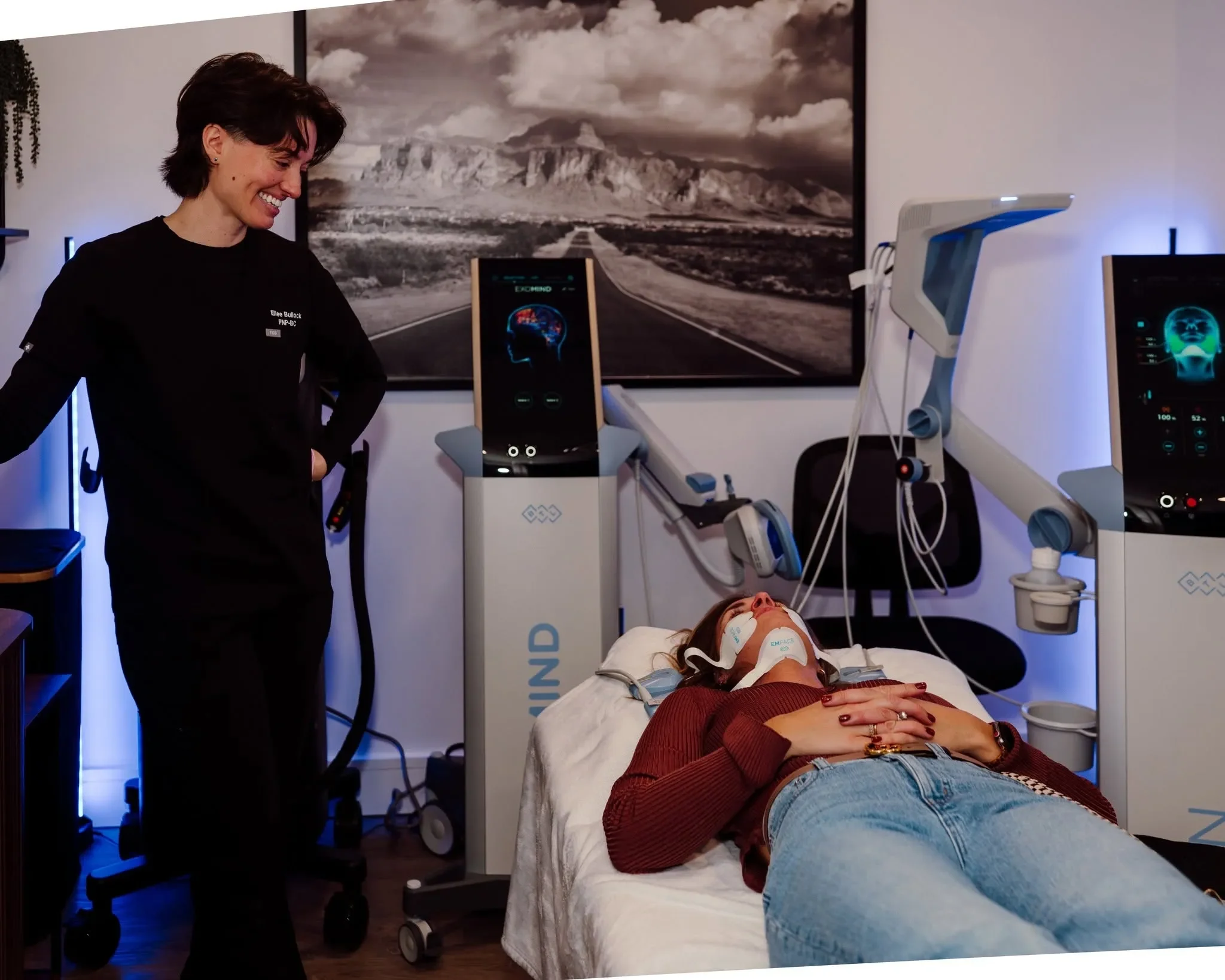
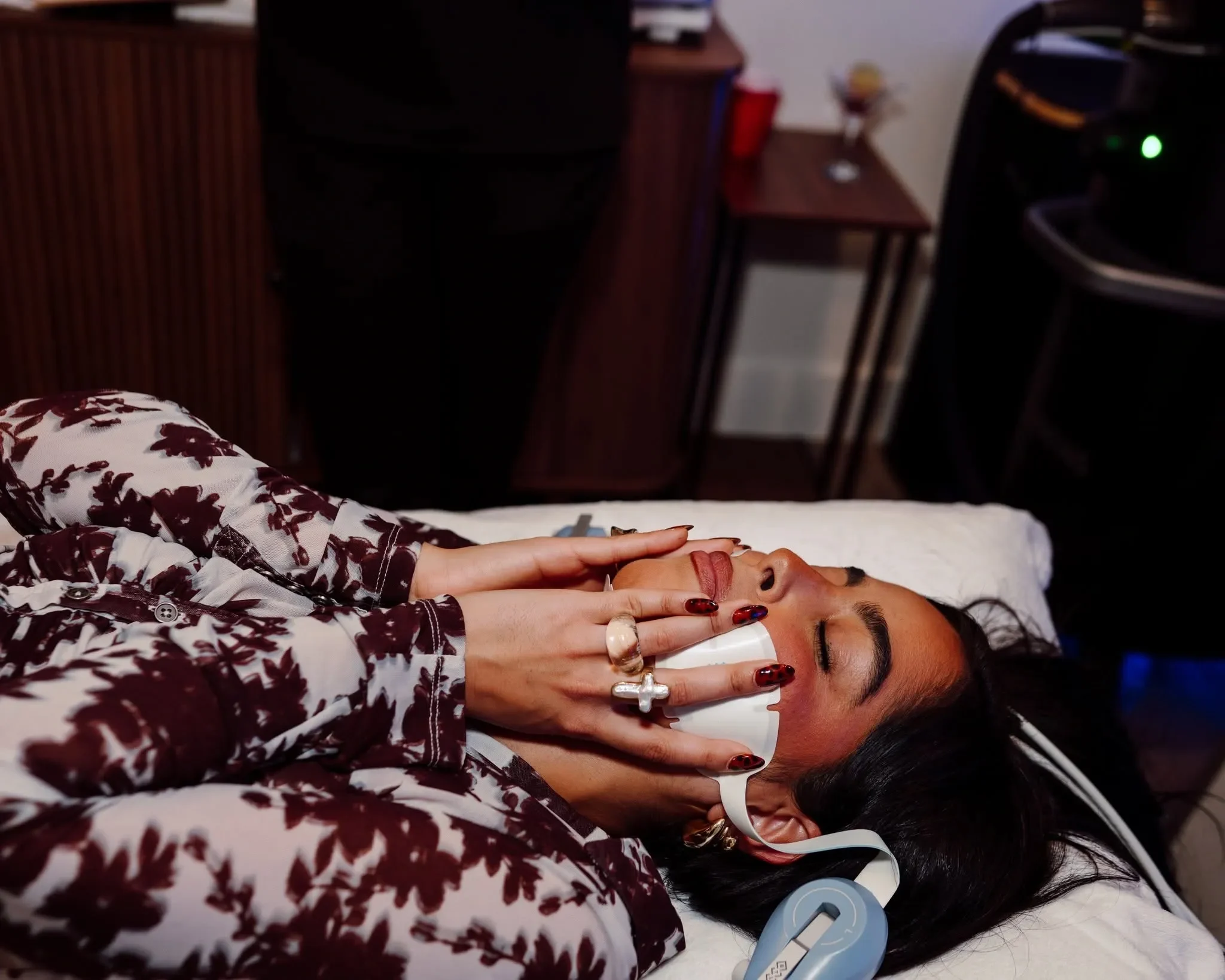
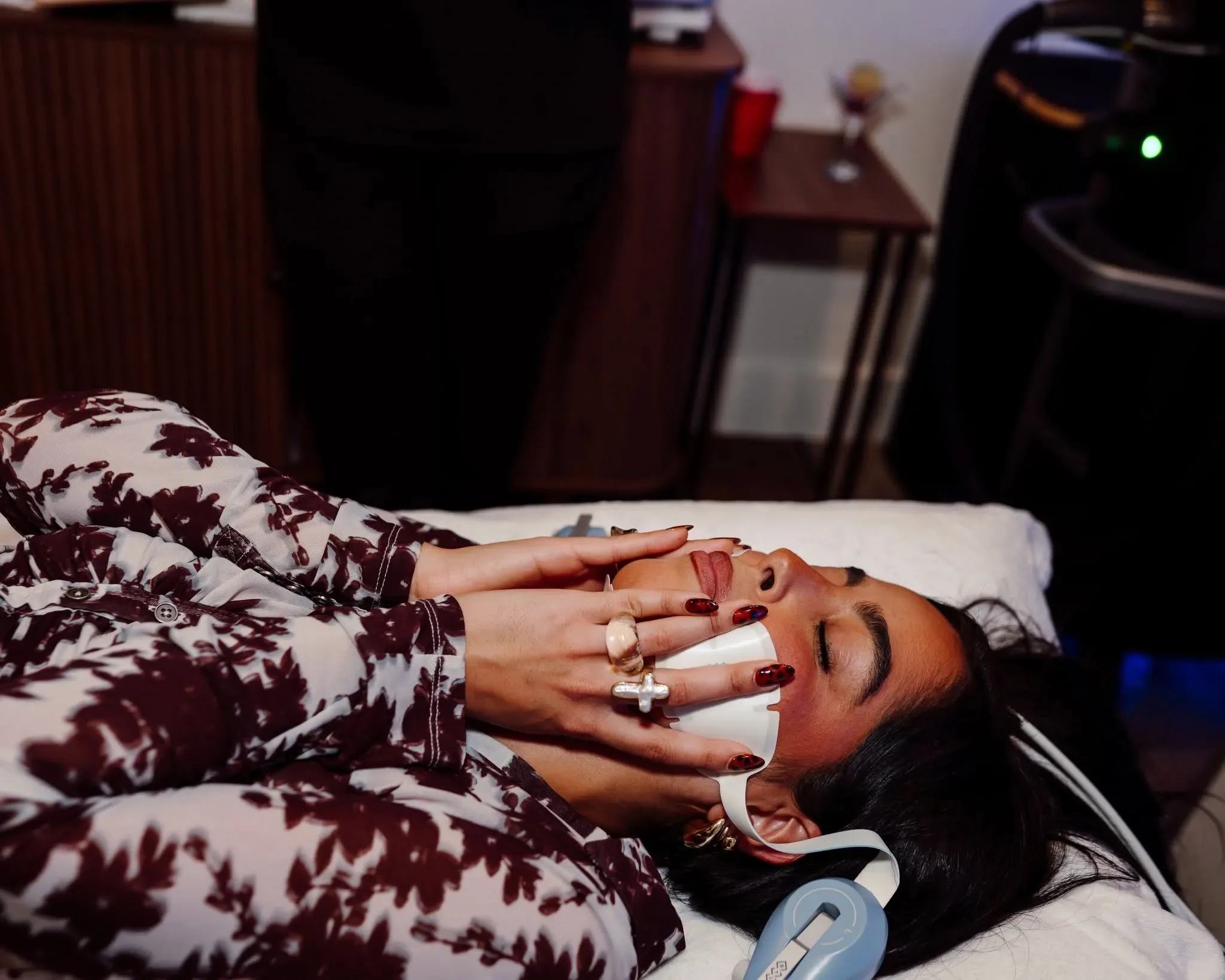
Emface for TMJ
Needle-free jaw muscle therapy that eases clenching, grinding and TMJ tension.
- No Injections
- No Downtime
- Bite Stays Untouched
Related Treatment
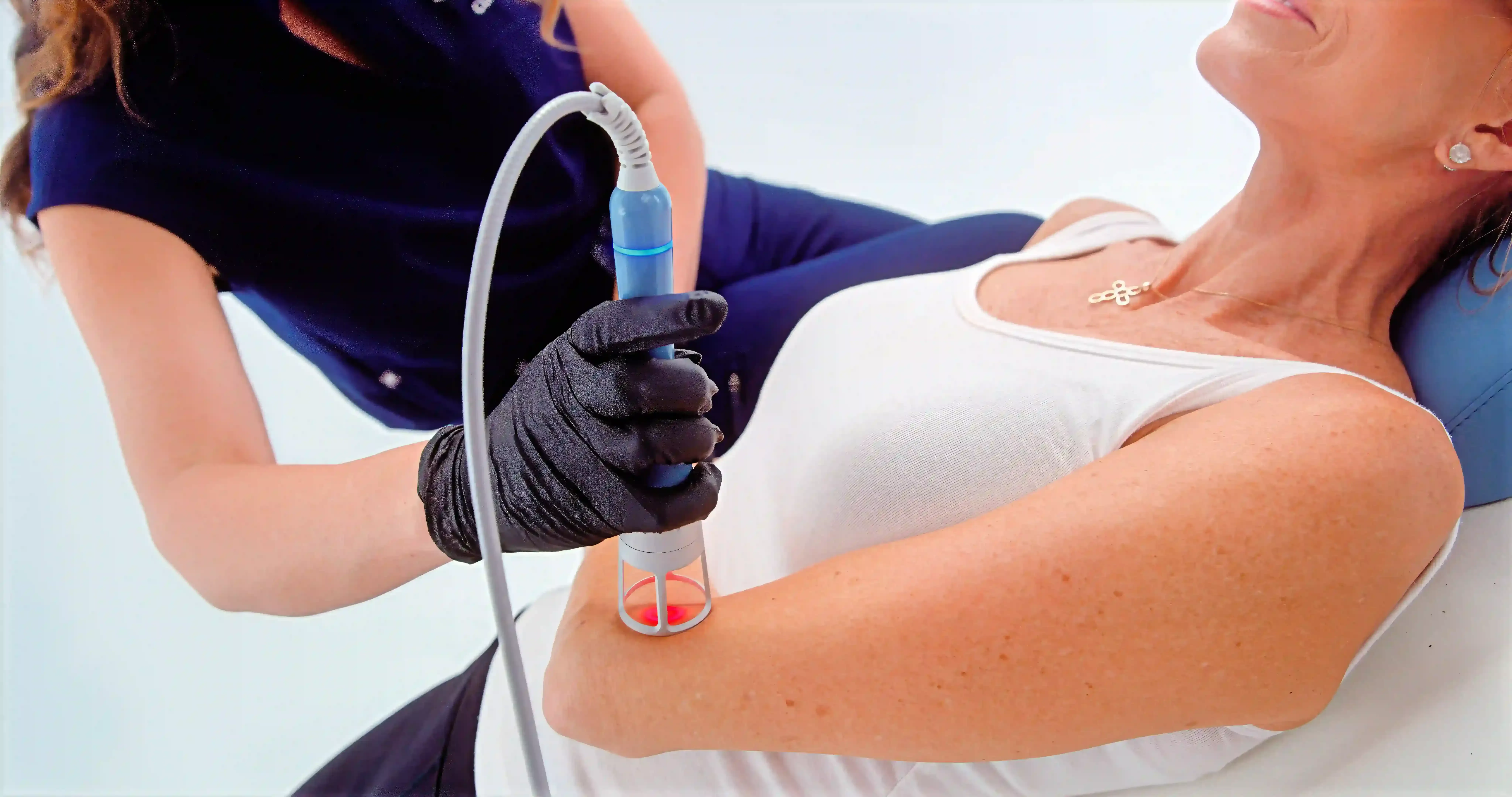
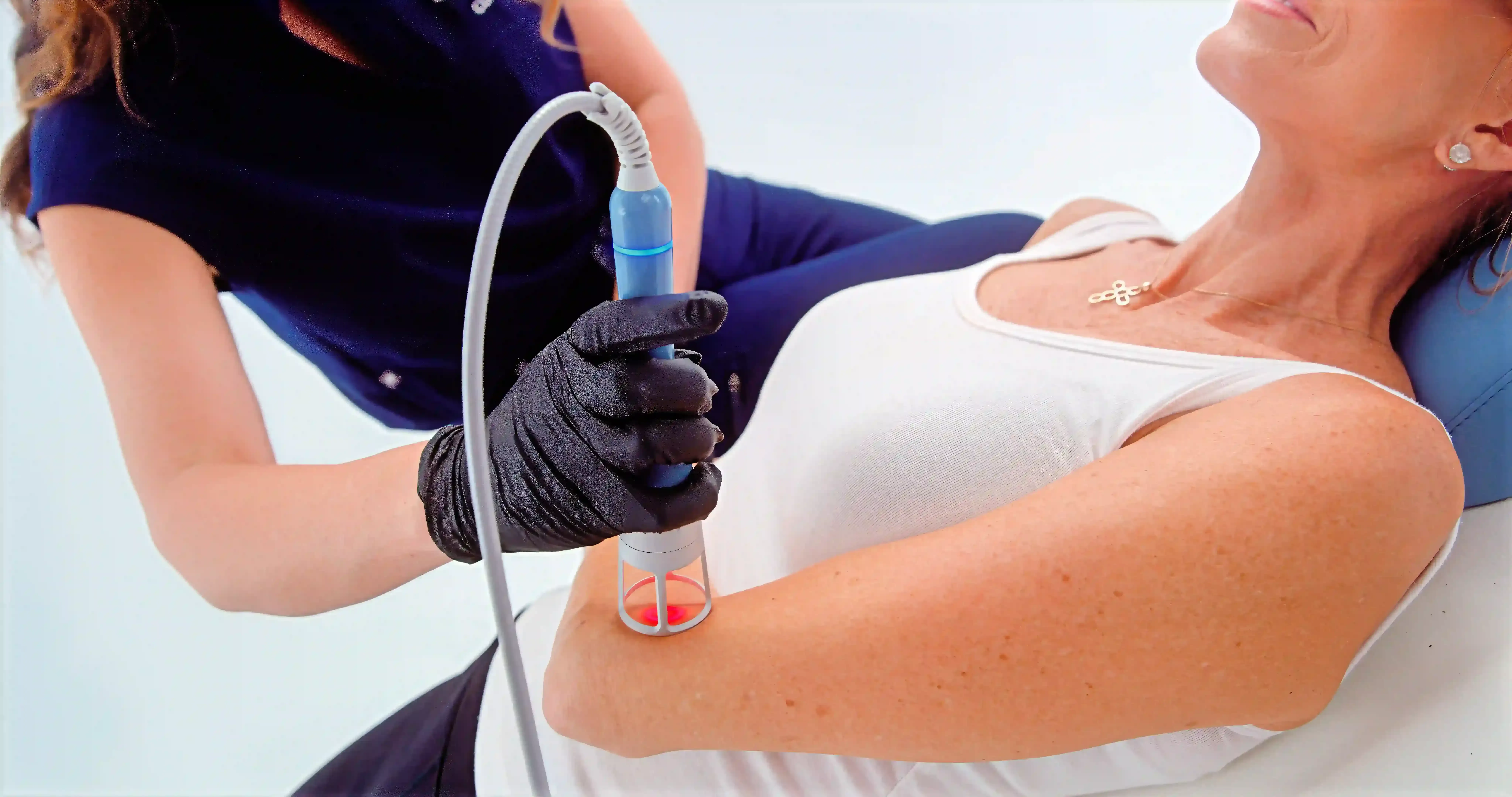
Laser Therapy for Pain with Emvital
Targeted 1064 nm laser energy that eases muscle and joint pain, stiffness and spasm with no downtime.
- No Downtime
- Drug Free
- Deep Tissue Reach
Related Treatment
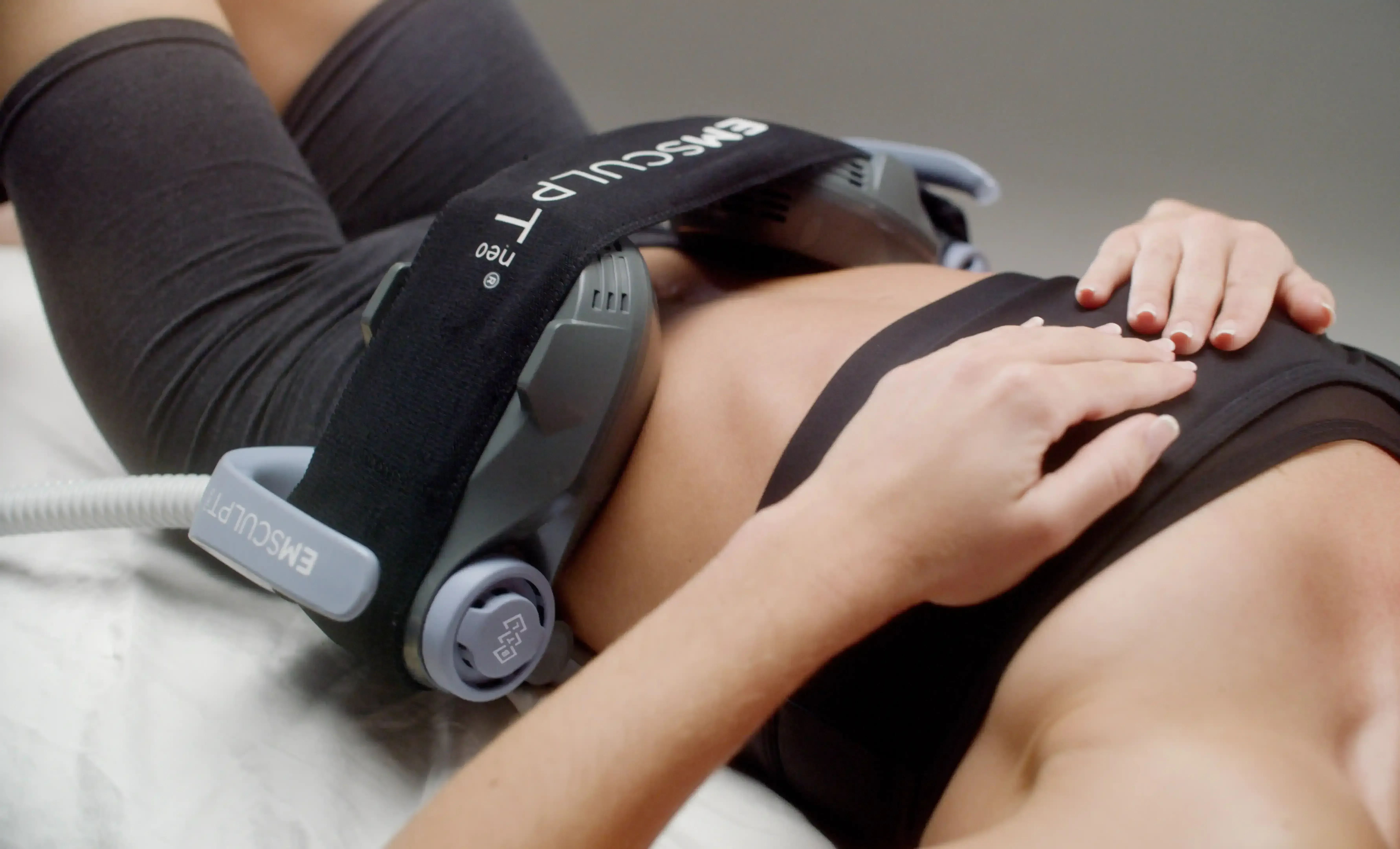
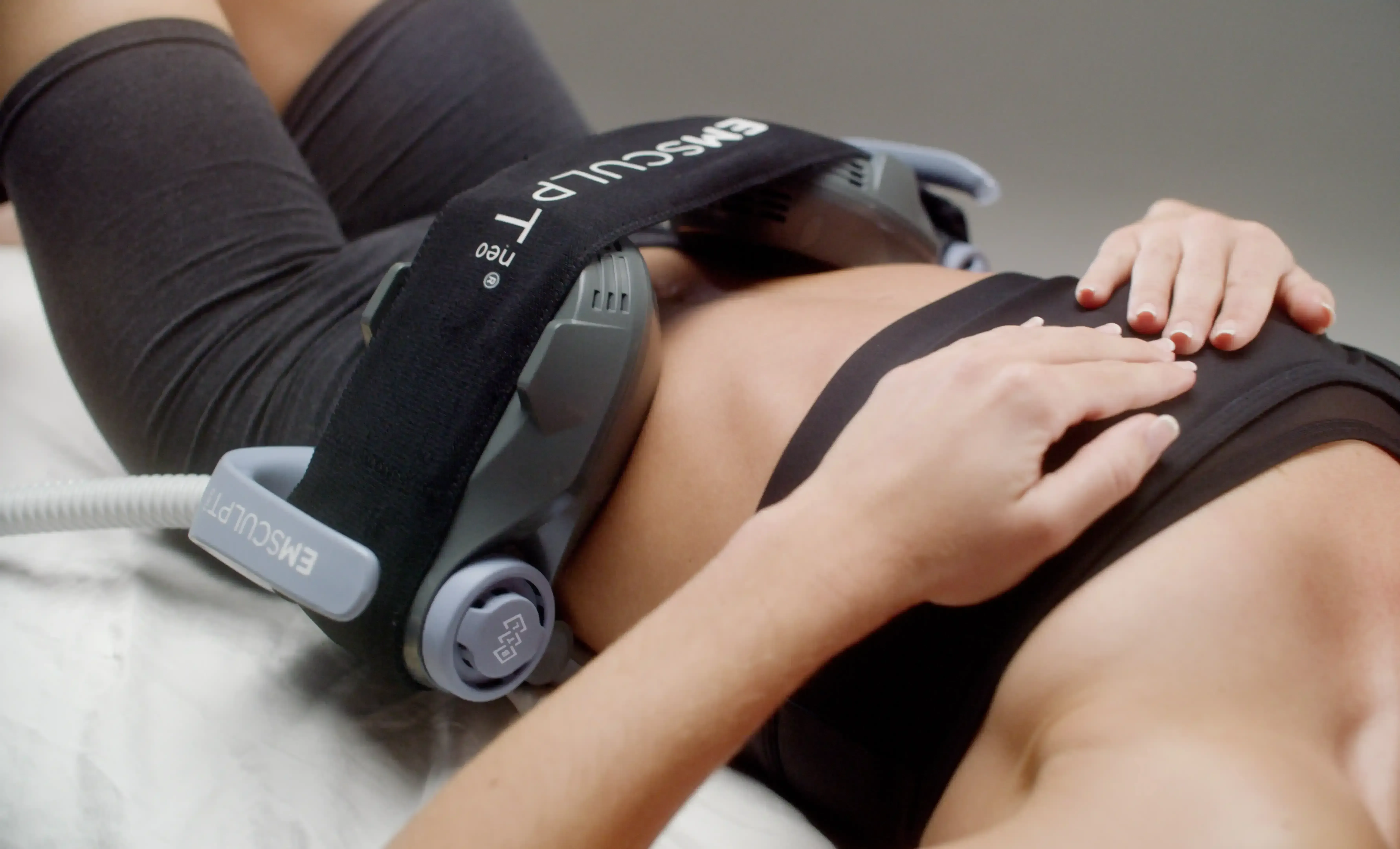
Functional Wellness with Emsculpt Neo
A supervised muscle strengthening protocol that rebuilds core stability without a gym, weights or downtime.
- No Gym Required
- Measurable Progress
- Joint Friendly
Your Questions
Frequently Asked Questions
What is the difference between muscle jaw pain and a TMJ joint problem?
Why does my jaw hurt most in the morning?
Should I see a dentist or a med spa for TMJ treatment?
How long does it take to feel relief?
Can clenching actually damage my teeth?
Is snoring connected to my jaw pain?
When should jaw pain be treated as urgent?
Schedule Today Your TMJ & Jaw Pain Consultation
Scientific References
- Valesan LF et al., Clin Oral Investig. (2021). A systematic review and meta-analysis placed the pooled prevalence of temporomandibular joint disorders in adults at roughly one in three. PMID: 33409693.
- Tran C et al., Int J Oral Maxillofac Surg. (2022). A rapid review of systematic reviews and guidelines found that conservative, reversible care should be the first-line management of temporomandibular disorders. PMID: 35339331.
- Verhoeff MC et al., J Oral Rehabil. (2025). An international consensus meeting updated the definitions of sleep and awake bruxism as masticatory muscle activities rather than disorders in healthy people. PMID: 40312776.
- Stanisic N et al., J Evid Based Dent Pract. (2025). A systematic review and meta-analysis reported awake bruxism to be common across general populations, with prevalence varying widely by assessment method. PMID: 40716827.
- Diaz L et al., Photodiagnosis Photodyn Ther. (2025). A systematic review of randomized clinical trials found low-level laser therapy reduced pain in temporomandibular disorders. PMID: 40096874.
- National Institute of Dental and Craniofacial Research. (2024). Overview of temporomandibular disorders, their symptoms and conservative first-line care.