

Hair Loss and Thinning Hair Treatment in Covington, KY
Keep the Hair You Still Have
- Common In:
- Women and men over 40
- Primary Causes:
- Genetics, hormones, deficiency
- Treatment Time:
- 20-30 minutes
- Results:
- 3 to 12 months


Understanding Hair Loss
What Thinning Hair and Hair Loss Actually Are
Recognizing the Signs
Hair loss is not one condition. It is a symptom, and it has at least a dozen possible drivers: heredity, hormones, thyroid function, iron stores, medication, illness and the way you wear your hair. If you have been searching for hair loss treatment near me from Covington, Kenton County or anywhere across Northern Kentucky and greater Cincinnati, Ohio, the first useful step is working out which of those is actually happening on your scalp. The answer changes what will help.
Most pages on this subject are written for men, and that leaves a lot of women reading about a receding hairline they do not have. Female pattern hair loss usually shows up as diffuse thinning across the top of the head, with the center part widening a little more each year, while the front hairline stays where it always was. It is gradual, it is easy to talk yourself out of noticing, and it is frequently missed or dismissed.
Patients from Newport, Erlanger and Florence tend to describe the same three moments: a ponytail that has gone noticeably thinner in the hand, scalp showing through under overhead light in a restaurant, and the growing pile of hair in the shower drain that nobody else seems to think is a problem. All three are worth taking seriously.
Why Hair Thins and Falls Out
Understanding the Root Causes
01The Science
Every follicle on your scalp runs its own cycle. It spends two to six years actively growing, a few weeks winding down, then roughly three months resting before the strand releases and a new one starts. Because the roughly 100,000 follicles on a scalp are all at different points in that cycle, shedding 50 to 100 hairs a day is normal. Visible thinning starts when the balance tips: more follicles resting, fewer growing, and each new strand emerging a little finer than the one it replaced.
In pattern hair loss, the mechanism is miniaturization. Follicles that are genetically sensitive to dihydrotestosterone, a derivative of testosterone that both women and men produce, shorten their growth phase with each cycle. The hair they make gets progressively thinner, shorter and lighter in color until it is barely more than fuzz, and eventually the follicle stops producing altogether. The American Academy of Dermatology identifies this hereditary pattern as the most common cause of hair loss in both sexes.
The second common mechanism is telogen effluvium, and it works differently. A shock to the system, a serious illness, surgery, childbirth, a crash diet, a new medication or a period of severe stress, pushes an unusually large share of follicles into the resting phase at once. Two to four months later they all shed together, which is why the hair loss seems to come out of nowhere long after the event that caused it. This type usually recovers once the trigger is resolved.
02Deeper Understanding
Female Pattern Hair Loss Is Different
Why Women Are So Often Missed
Men and women lose hair in different shapes, and that difference is the reason so many women go years without a clear answer. Male pattern loss retreats from the temples and the crown, leaving recognizable bare zones. Female pattern loss spreads out instead: density drops across the whole top of the scalp while the frontal hairline is preserved, so the earliest reliable sign is the part line widening rather than anything receding. A woman can lose a large share of her density before the change is obvious in a mirror.
Menopause accelerates it. Falling estrogen shortens the growth phase and leaves the follicle's androgen sensitivity comparatively unopposed, which is why so many women date their thinning to their late forties or fifties. The Cochrane review of interventions for female pattern hair loss found that light-based therapy was among the approaches with supporting randomized evidence in women, though the quality of that evidence varies by device.
That evidence is the reason we offer laser hair restoration with Folix rather than a shelf of supplements. Low-level laser therapy is non-hormonal, it does not interact with menopause management, and it can be run alongside whatever your physician has already prescribed. It works best early, while follicles are miniaturizing rather than gone, which is precisely the window most women are in when they first notice the part line.
Contributing Factors
What Causes Thinning Hair and Hair Loss?
Identifying Your Triggers
Several causes commonly overlap on the same scalp, which is why a good assessment looks at heredity, hormones and bloodwork together rather than picking one. Whole-body factors matter here more than they do for most cosmetic concerns, so our wellness services in Covington often sit alongside hair care in the same plan.
Androgenetic Alopecia
Inherited sensitivity to DHT shortens each growth cycle, so strands come back finer until the follicle stops producing. Affects women and men.
Menopause and Falling Estrogen
Declining estrogen shortens the growth phase and leaves follicles more exposed to androgens, which is why thinning often starts in the late forties.
Thyroid Disorders
Both an underactive and an overactive thyroid disrupt the hair cycle, and diffuse shedding is sometimes the first symptom anyone notices.
Iron Deficiency and Low Ferritin
Ferritin can sit low enough to affect hair growth while a standard blood count still reads normal, so it is worth testing specifically.
Telogen Effluvium
Illness, surgery, childbirth, rapid weight loss or severe stress pushes many follicles into rest at once, with heavy shedding two to four months later.
Medications, Traction and Autoimmune Loss
Some prescriptions trigger shedding, tight braids and extensions pull follicles out over time, and alopecia areata attacks them in sudden round patches.

Why Applegate
Why Choose Applegate MedSpa for Hair Loss Care in Covington, KY
Hair loss is the concern where being told the truth is worth more than being sold a package. Elizabeth Taylor, APRN brings a background in acute care medicine and advanced aesthetic training to that first assessment, and will tell you plainly if your pattern needs a physician rather than a laser. You can see how hair fits alongside every other condition we treat in Covington.
- Honest About the Ceiling
- We say clearly that laser therapy maintains and thickens what is still growing, and will not regrow hair where the follicle is gone.
- Causes Checked First
- If your history points to thyroid disease, low ferritin or a scarring process, we send you for bloodwork and a diagnosis before anything else.
- Written for Women Too
- Diffuse crown thinning and a widening part are assessed as carefully here as a receding hairline, not treated as a lesser version of it.
- A Structured Folix Course
- Low-level laser therapy works on repetition, so the protocol is a planned series of short sessions rather than an open-ended commitment.
- Dentist-Founded Practice
- Dr. Barry Applegate, DMD has practiced in Covington since 1993 and founded the med spa in 2024 to bring clinical technology, not products, to concerns like hair loss.
- No Downtime Sessions
- Folix sessions are short, need no recovery and leave nothing to hide afterwards, so the series fits around work and travel.
Treatment Options Comparison
Laser hair restoration with Folix is the treatment we provide for thinning hair in Covington, KY. The table below shows what it involves, and the section under it sets it beside the other routes people commonly try.
| Treatment | Best For | Session Time | Results Timeline | Maintenance |
|---|---|---|---|---|
| Laser Hair Restoration with Folix | Early to moderate pattern thinning | 20-30 minutes | 3 to 6 months | 12 sessions, then upkeep |
Other Approaches People Try
These are not offered at Applegate MedSpa. They are here so you can weigh your options honestly, and several of them work well alongside laser therapy rather than instead of it.
| Treatment | Best For | Session Time | Results Timeline | Maintenance |
|---|---|---|---|---|
| Topical Minoxidil | Daily at-home maintenance | Applied daily | 4 to 6 months | Ongoing, indefinitely |
| Oral Finasteride | Male pattern loss, by prescription | Daily tablet | 6 to 12 months | Ongoing, indefinitely |
| PRP Injections | Moderate thinning, needle based | 45-60 minutes | 3 to 6 months | Every 4 to 6 months |
| Hair Transplant Surgery | Advanced loss with bare scalp | 4 to 8 hours | 9 to 12 months | Usually one-time surgery |
You May Be Experiencing Thinning Hair If...
Recognizing your own pattern early matters, because laser therapy supports follicles that are still working and cannot restore ones that have already closed. Most patients who do well with Folix laser for thinning hair recognize several of the signs below. There are also signs that point away from a laser course and toward a physician first: hair that falls out in sudden round patches, loss accompanied by scalp pain, itching, scaling, redness or visible scarring, or shedding alongside fatigue, weight change, irregular periods or new skin and nail changes. Any of those warrant a medical workup, including thyroid function and ferritin bloodwork, before you spend money on any cosmetic treatment.
A Widening Part
The line down the center of your scalp has slowly grown wider over a few years, though your front hairline has not moved.
A Thinner Ponytail
You can feel the difference when you gather it, and the elastic now wraps an extra turn or two compared with a few years ago.
More Hair in the Drain
Shedding has gone well past the usual 50 to 100 strands a day, and it shows up on the pillow and the brush as well as the shower.
Scalp Showing Through
Overhead lighting or a flash photograph reveals scalp across the crown that you never used to see in the same conditions.
Receding Temples or Crown
The hairline has stepped back at the temples or a thin spot has opened at the crown, the more typical male pattern presentation.
Hair That Will Not Grow Long
Strands reach a certain length and stop, or feel finer and more fragile than the hair you remember having in your thirties.


Related Treatment
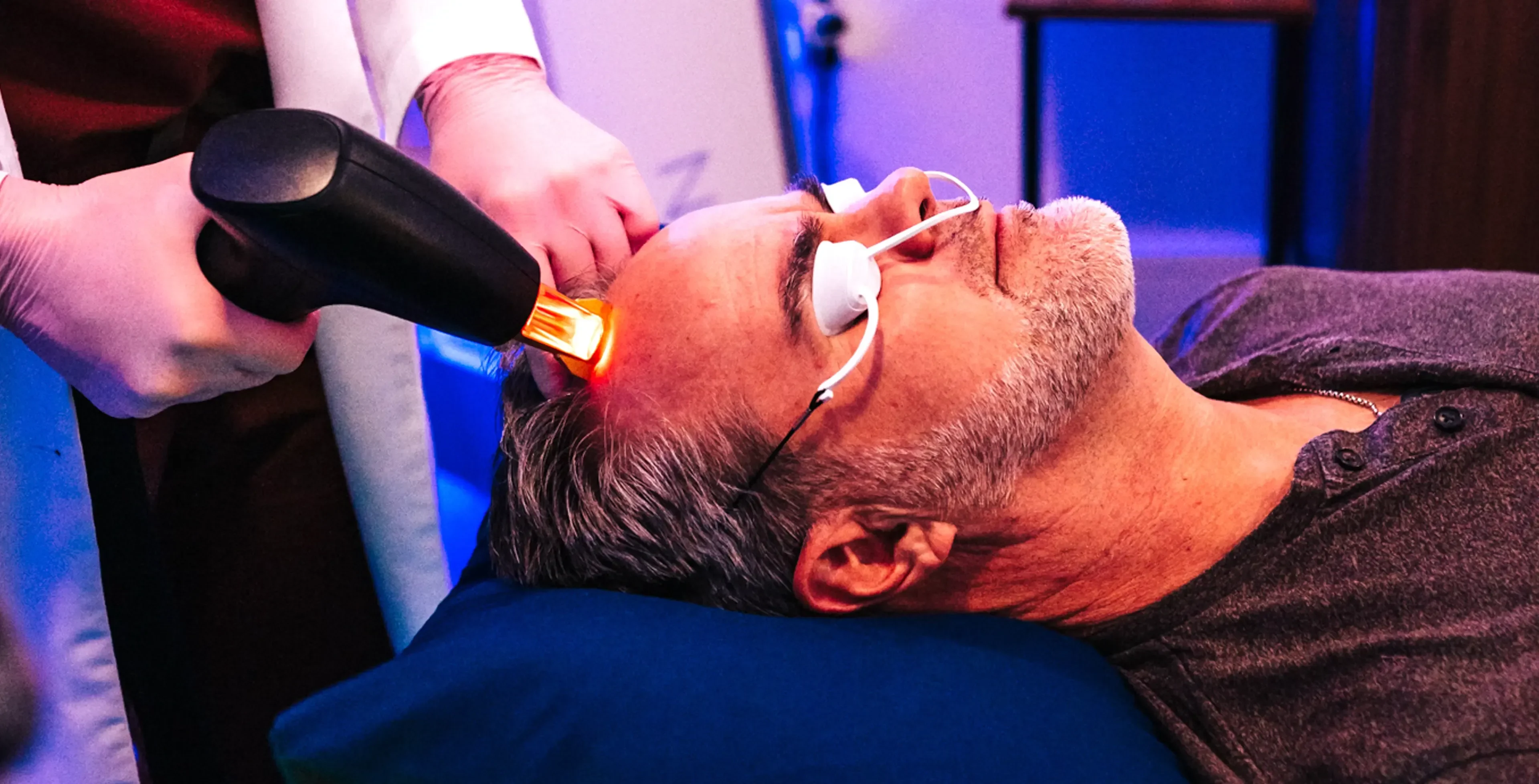
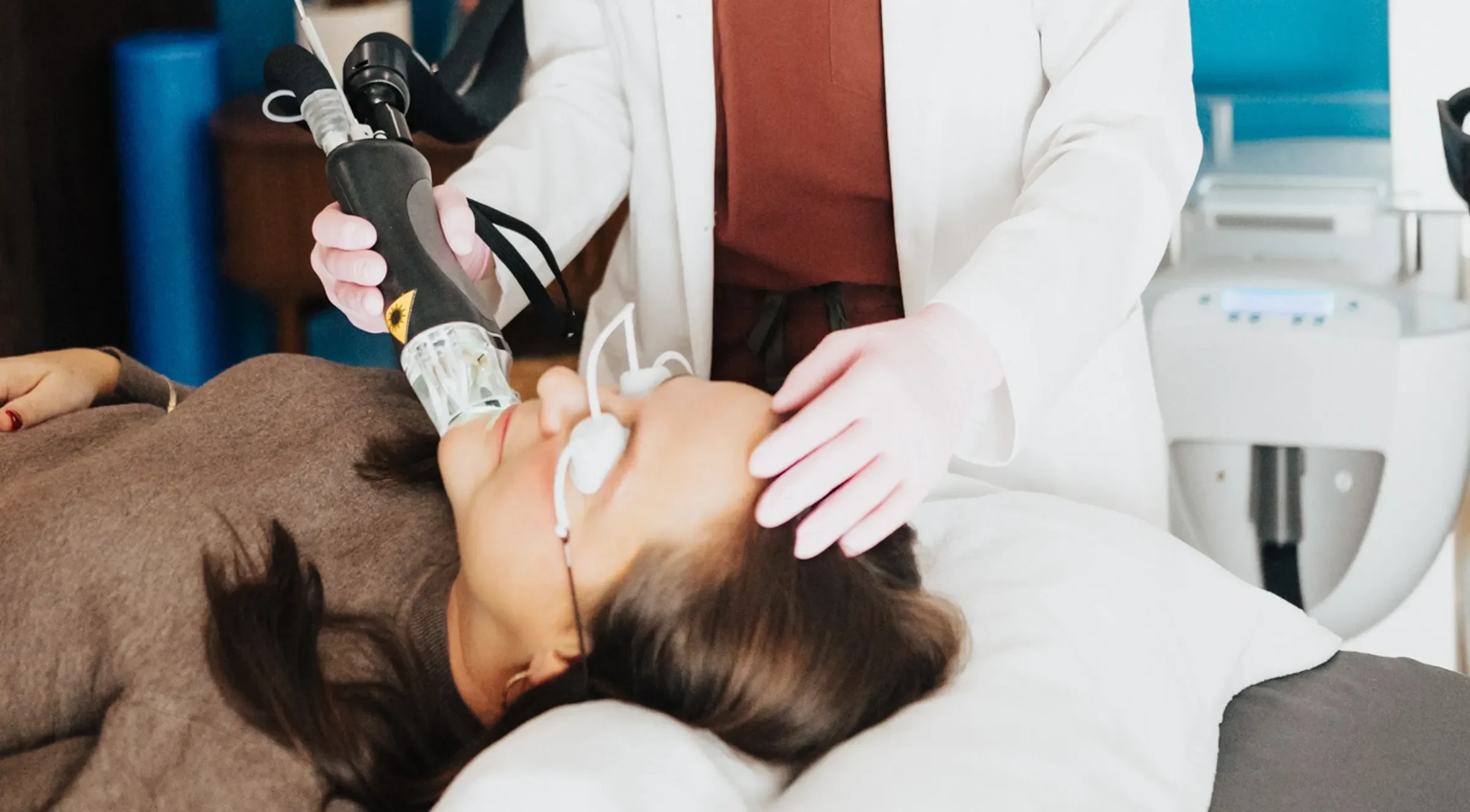
Laser Hair Restoration with Folix
Low-level laser therapy that energizes thinning hair and supports regrowth, with no surgery and no downtime.
- No Surgery
- Zero Downtime
- Painless Sessions
Related Treatment
Laser Hair Removal with Splendor X
Two laser wavelengths in a single pulse for smoother skin and lasting hair reduction on every skin tone.
- All Skin Tones
- Lasting Reduction
- Fewer Ingrowns
Related Treatment
InBody Scan
Measure. Treat. Measure again.
- Under a Minute
- Nothing Invasive
- Proof of Progress
Related Treatment
Emsculpt Neo
Radiofrequency and muscle stimulation in one 30 minute session, with no surgery and no downtime.
- Fat and Muscle at Once
- No Surgery or Needles
- Zero Downtime


Your Questions
Frequently Asked Questions
Can laser therapy regrow hair I have already lost?
Does laser hair restoration work for women?
How long before I see any difference?
When should I see a doctor instead of booking laser sessions?
Which blood tests actually matter for hair loss?
Is laser hair restoration the same as laser hair removal?
Does the treatment hurt or need downtime?
Can I keep using minoxidil or my prescription at the same time?
Schedule Today Your Thinning Hair & Hair Loss Consultation
Scientific References
- Jimenez JJ et al., Am J Clin Dermatol. (2014). Efficacy and safety of a low-level laser device in male and female pattern hair loss, a randomized sham device-controlled study. PMID: 24474647.
- Lanzafame RJ et al., Lasers Surg Med. (2014). Measured the growth of human scalp hair in females using visible red light laser and LED sources against sham treatment. PMID: 25124964.
- Suchonwanit P et al., Lasers Med Sci. (2019). A 24-week randomized, double-blind, sham device-controlled study reported greater hair density with low-level laser therapy in men and women. PMID: 30569416.
- van Zuuren EJ et al., Cochrane Database Syst Rev. (2016). A Cochrane systematic review of interventions for female pattern hair loss, covering medical and light-based options. PMID: 27225981.
- Kakpovbia E et al., J Drugs Dermatol. (2021). Reviews laboratory testing in telogen effluvium, including thyroid studies and ferritin, to identify treatable underlying causes. PMID: 33400415.
- Kamp E et al., Clin Exp Dermatol. (2022). Reviews how menopause and declining estrogen influence hair disorders, including female pattern hair loss. PMID: 35796569.
- American Academy of Dermatology. (2024). Patient guidance on the causes of hair loss, when to seek evaluation and what treatment can realistically achieve.