RF Microneedling vs Traditional Microneedling: What Is the Difference?
Traditional microneedling triggers collagen with needles alone. RF microneedling adds radiofrequency heat at depth, and Exion Face offers a needle-free third option. Here is how the three compare on results, sessions, downtime, comfort and cost.
The difference between RF microneedling and traditional microneedling is energy. Traditional microneedling uses fine needles to create controlled micro-injuries that prompt the skin to rebuild collagen. RF microneedling uses those same needles as delivery channels for radiofrequency heat, which remodels tissue at a depth needles alone cannot reach. Both improve surface texture. Only the radiofrequency version meaningfully addresses laxity, deeper acne scarring and enlarged pores within the same course of treatment.
What Traditional Microneedling Does
Traditional microneedling is often called collagen induction therapy, and the name explains the mechanism. A pen or roller passes hundreds of fine needles through the upper layers of skin, usually 0.5 mm to 2.5 mm deep. Each puncture is a controlled micro-injury, and the skin responds as it would to any wound: fresh collagen is laid down and the existing network reorganises over weeks. A systematic review of the microneedling literature found consistent gains in texture, fine lines and superficial scarring, with a low complication rate in trained hands.
What it does not do well is lift. Mechanical injury at 2 mm cannot change the deeper dermis enough to tighten skin that has already loosened. We do not offer traditional microneedling as a standalone service: we built the skin treatments at Applegate Dentistry & MedSpa around technologies that do more in fewer appointments.
What RF Microneedling Adds
RF microneedling keeps the needles and adds a second mechanism. They are insulated along the shaft and conductive at the tip, so at depth they release radiofrequency energy into the dermis rather than the skin surface, heating a small, precisely bounded zone of tissue. Heated collagen contracts straight away, and fibroblasts then produce new collagen and elastin over the following weeks.
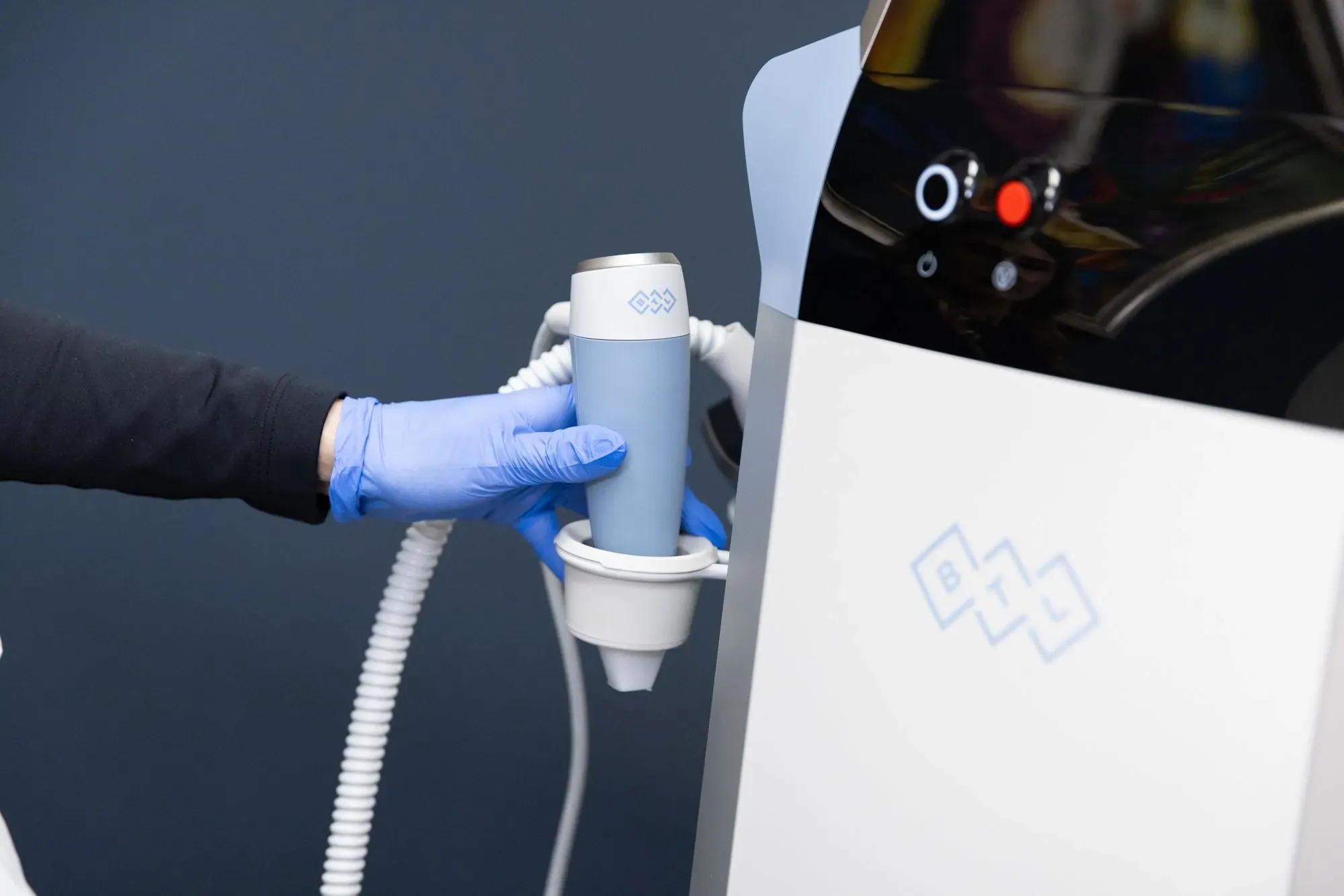
Two stimuli arrive in one pass. A systematic review of radiofrequency microneedling reported improvement in acne scarring, laxity, texture and pore appearance, with most protocols running three to four sessions. The Exion Fractional RF applicator we use is single-pass, so the area is covered in one sweep rather than the stacking older devices required.
RF Microneedling vs Traditional Microneedling: A Direct Comparison
Depth and Mechanism
Traditional microneedling works by mechanical injury alone, concentrated in the epidermis and upper dermis. RF microneedling works by injury plus controlled heat placed at the needle tip, in the mid to deep dermis. That difference is the whole story: collagen deep enough to hold facial structure is reachable with energy and out of reach without it.
What Each Treats Best
Traditional microneedling is strongest on surface concerns: fine lines, rough texture, dullness and shallow rolling acne scars. RF microneedling is stronger where depth matters, meaning early jawline laxity, boxcar scars and enlarged pores that have not responded to topical work. If pore size bothers you most, see treatment for large pores and rough texture.
How Many Sessions You Typically Need
Most traditional microneedling protocols run six or more sessions three to four weeks apart, because each delivers a relatively small stimulus. Our RF course is four sessions, four to six weeks apart, since each delivers both mechanical and thermal stimulus.
Downtime and the First 48 Hours
Both leave the skin pink and warm, like a moderate sunburn. After traditional microneedling most patients look flushed for 24 hours and normal by day two. After RF microneedling the first day is pinker and slightly swollen, and many see a faint grid of tiny dots where the needles entered, typically fading within 48 to 72 hours.
Comfort and Numbing
Neither treatment is painful in the way people fear, and neither is nothing. Both follow topical numbing cream left on for 20 to 30 minutes. Traditional microneedling feels like firm sandpaper drawn across the skin. RF microneedling adds a brief warmth with each pass, most noticeable over the forehead and jawline.
Safety Across Skin Tones
Radiofrequency has a genuine advantage here. Many resurfacing lasers target melanin, which raises the risk of post-inflammatory hyperpigmentation in richly pigmented skin. Radiofrequency targets water instead, so it does not discriminate by pigment. The American Academy of Dermatology considers both treatments safe for all skin tones. Safe in principle is not safe in any hands, though: conservative settings and an experienced operator still matter, and pigment changes remain possible in Fitzpatrick types IV to VI if a treatment is pushed too hard.
Cost Per Session and Cost Per Result
Traditional microneedling is cheaper per session almost everywhere, which is exactly why that number misleads. What matters is cost per result. Our RF course is four sessions at $500 each. A needling-only course aiming at similar improvement usually runs longer, often eight or more appointments, and may still fall short on laxity. Cherry Financing is available.
The Third Option Most Articles Miss
Almost every article presents a two-way choice, which is a shame, because for many patients the right answer involves no needles at all. Exion Face combines monopolar radiofrequency with targeted ultrasound to stimulate the skin's own hyaluronic acid, collagen and elastin. No puncture, no pinpoint bleeding, effectively no downtime. The trade-off is that a gentler treatment needs more sessions: eight at $250 each.
Choose the needle-free route when dryness, dullness, crepiness and early softening are the main complaints, or when your schedule cannot absorb two days of pinkness. Full detail sits on our page for needle-free skin tightening with Exion Face, and the manufacturer publishes technical specifications for the Exion applicators.
How to Choose: A Quick Guide by Concern
- Fine lines. Either option helps. Needle-free RF is easier if the lines are early and the skin is otherwise healthy.
- Enlarged pores and rough texture. RF microneedling, since heat at depth tightens the collagen around the pore opening.
- Acne scars. RF microneedling for boxcar and deeper rolling scars. See acne scar treatment in Covington, KY.
- Jawline laxity. RF microneedling if you accept short downtime, needle-free RF if you do not.
- Dryness and dullness. Needle-free RF with ultrasound, since the goal is skin quality rather than structural remodelling.
What to Expect at an Exion RF Microneedling Appointment
Your first visit starts with a consultation. Elizabeth Taylor, APRN, or Dr. Applegate will assess your skin, ask what has and has not worked before, review your medical history and confirm that energy-based treatment suits your goals.
The skin is cleansed and numbing cream sits for 20 to 30 minutes. The applicator then passes over the area once, with settings chosen zone by zone: conservative around the eyes and neck, deeper across the cheeks. Active treatment takes 30 to 60 minutes. Afterwards the skin is cooled and a barrier product applied, and you go home told to skip makeup for 24 hours, pause retinoids and acids for five days and wear mineral sunscreen daily. Most patients notice smoother, brighter skin within two weeks, while firmness and scar depth build over three to six months.
Who Is Not a Good Candidate
We postpone or decline treatment for anyone with an active skin infection, an open cold sore or inflamed cystic acne in the area, anyone pregnant or breastfeeding, and anyone who has taken isotretinoin in the last six months. Because the treatment delivers electrical energy, patients with a pacemaker, defibrillator or other implanted electronic device are not candidates. Keloid scarring, poorly controlled diabetes or an autoimmune condition affecting healing needs a careful conversation first.
Frequently Asked Questions About RF Microneedling vs Microneedling
What is the difference between RF microneedling and microneedling?
Traditional microneedling creates controlled micro-injuries with fine needles to trigger collagen production. RF microneedling does the same and delivers radiofrequency heat through the needle tips into the deeper dermis. That heat contracts existing collagen and builds new collagen at a depth needles cannot reach, which makes it stronger on laxity, scarring and pore size.
Is RF microneedling better than microneedling?
It is stronger, which is not always the same as better. For surface texture and fine lines the two are broadly comparable. For laxity, boxcar acne scars and enlarged pores, RF microneedling typically produces more improvement in fewer sessions. The right answer depends on your concern and your tolerance for downtime.
Does RF microneedling hurt?
Most patients describe it as tolerable rather than painful. Topical numbing cream is applied for 20 to 30 minutes beforehand, which handles most of the needle sensation. What people notice is a brief warmth with each pass, strongest over the forehead and jawline. Settings are dialled back if a zone feels uncomfortable.
How many RF microneedling sessions do I need?
Our standard course is four sessions spaced four to six weeks apart, matching the protocols used in most published studies. Some patients treating early texture change are satisfied after three, and deeper acne scarring may benefit from a maintenance session later in the year. We reassess at the end of the course.
How long is the downtime after RF microneedling?
Plan for 24 to 48 hours of visible pinkness and mild swelling, similar to a moderate sunburn. Many patients also see a faint pattern of tiny dots where the needles entered, usually fading within 48 to 72 hours. Makeup is generally fine after the first day.
When will I see results from RF microneedling?
Early brightening and smoother texture are often noticeable within one to two weeks. The results that matter most, firmness and scar depth, build gradually as new collagen forms, typically over three to six months after the final session. Comparison photographs are more reliable than daily mirror checks.
Is RF microneedling safe for darker skin tones?
Generally yes. Radiofrequency targets water rather than melanin, so it carries a lower risk of pigment-related complications than many resurfacing lasers. The American Academy of Dermatology considers both treatments safe for all skin tones. Conservative settings and an experienced operator still matter, and we treat Fitzpatrick types IV to VI with measured energy.
Can RF microneedling be combined with other treatments?
Yes, with sensible spacing. It pairs well with neuromodulator injections, medical-grade skincare and needle-free tightening between appointments. We avoid stacking energy treatments on the same skin within a two-week window and schedule around any planned chemical peel. Your provider maps the sequence at your consultation.
Book Your Skin Consultation in Covington, KY
The fastest way to settle this is to have someone look at your skin. Book a consultation to talk through RF microneedling in Covington, KY and we will tell you honestly whether the needles are worth it, or whether the needle-free route gets you there with less disruption. Call (859) 365-3300 or use our contact page. Applegate Dentistry & MedSpa is at 322 Greenup St, Covington, KY 41011.
This article is educational and is not a diagnosis, a treatment plan or a substitute for a consultation with a qualified provider. Individual results vary. Reviewed by Dr. Barry Dean Applegate, DMD, September 2026.